Human Performance in Maintenance Part 1
This first of a three part series is a two-day workshop, designed by maintenance
personnel for maintenance personnel. It is highly interactive and helps answer why
a conscientious person can end up causing an accident due to a maintenance
error.
Participants will learn what they can do to
avoid the maintenance error that no one ever intends to cause. It is a highly
interactive workshop that covers:
1) The objective and outline - Why
should you be here
This is often called the motivator or
reason to stay awake
2) What Interferes with our performance/judgement?
A very simple model is used to help
explain why we humans make errors and what are some of the things we can
do to lessen these errors
3) Behavioral Analysis
This Chapter uses aviation maintenance
related questions to enable each participant to look at his/her own
characteristics. Assertiveness or the lack of is covered in this
Chapter
4) Characteristics of an Aircraft
Maintainer
This Chapter is no longer covered in class
but is left for the participants to undertake on their own time
5) Human Factor Errors (The Dirty Dozen)
Six more of the Dirty Dozen are covered in
detail with solutions developed to lessen the chances of an error from them.
6) Stress
This is the first of the big four in the
Dirty Dozen and is covered in detail with solutions developed to reduce and
control it's negative effects
7) Fatigue
Another of the big four that is given the
most time in order to help reduce errors from it's effects
8) Communication or the lack of
This Chapter covers the importance of
communication and how to communicate effectively
9) Teamwork or the lack of
(Note: Teamwork is covered in part with a
survival exercise) The participants are made to realize that the complete
company is the team and not just their fellow workers
10) Case Studies
There are three case
studies mixed throughout the workshop. In these case studies they learn
how to identify the chain of events and develop "Safety Nets" to
avoid making the errors
11) Wrap up
The workshops all
end with the participants setting safety goals from what they have
learned
A certificate of
training is issued to the participants
Note: ALL our
workshops utilize two fully trained facilitators in order to provide
the best possible delivery of the workshop.
Some comments from past courses.
Q Gordon and Renée,
I’ll say good afternoon as that's what it is here. I
was on your course in Aer lingus on the 12, 13 Sep. I really enjoyed it
very much and I have to say it changed my life on a personal basis. I
understood the message you were putting forward and I have tried to make
people understand what there responsibility's are in regard to their
work and life.
On a personal basis after your course I took a look at my life and found it lacking. Contemplating myself I found that I had lost my inner child and had become a sad old man in my head. So I took a day off a week after the course, my wife took a day off too and I went to a barbers and had a radical hair and beard trim as I felt to change the way I feel now had to be reflected in the way I look so I could see the change.
The old me is in a locker in the bottom of the sea and I only have the key to it. This Idea of my old self in a box allows me to know where my old self is and it cant creep up on me, I have the key. Thank you so much for illuminating my life and giving me the means that I can use in work and personal life. My wife said I am a changed man and I seem 15 to 20 years younger in my attitude. My wife and I would like to thank you both for coming into my life and having a profound change in me.
Q Hi Gordon
It has been just over 4 months since we did the HUMAN FACTORS training with you. I often think of things that you imparted to us during those training sessions. Thank you for your passion and unique sense of humor.
I have made it a practice with our team that when we have a rare occasion of something going a bit off the tracks operationally or a slip-up in customer service – we do a debrief, retrace our steps and identify all the “links in the chain”. From there we use the “Dirty Dozen” as an overlay to see what contributed to the “situation”. Once we identify the issues, we discuss what steps will be taken to ensure that this problem does not repeat itself, and in some cases we are able to create a “safety net” to ensure that we catch any potential repeats of that problem. This has been very effective!
Another concept that you shared with us was “the child” and “the adult” – we often refer to it in our conversations with each other at the office. It has been a great way for me to understand myself and also a great way to observe other peoples’ behavior. It often serves me well, in that I am able to effectively remove myself from situations that can potentially go very bad and just observe “the child” taking over with others (like in traffic). This concept is applicable in every aspect of life, and so I am glad to have knowledge of it as a “tool” for my “toolbox”.
Hope all is well in your life and that you are continuing to gain great satisfaction from sharing your passion.
Best regards
Lonnie
Manger, Business Development
FitzWright Survival Inc.
Q Everyone in the industry should have an
opportunity to attend.
Q
It was easy to understand and the most
interesting I have ever done.
Q Great course. You sure can deliver the
message.
Q It will be a valuable tool for work and my
personal life. Thanks..
Q
As you know, I have been in Aviation for 47
years. This, by far, is the most valuable 2 days I have spent in all
those years - Thanks to the tag team - Gordon & Bill PS My
True Feeling
Signed Gerry LaBrusciano JetBlue April 6, 2006
Thank you
This course has been adapted from the 1993
Transport Canada/Industry developed workshop and completion of it qualifies as
recurrent training in Canada and the USA.
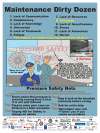
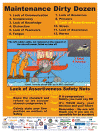
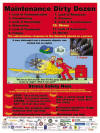
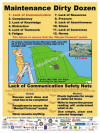
All our Human Performance in
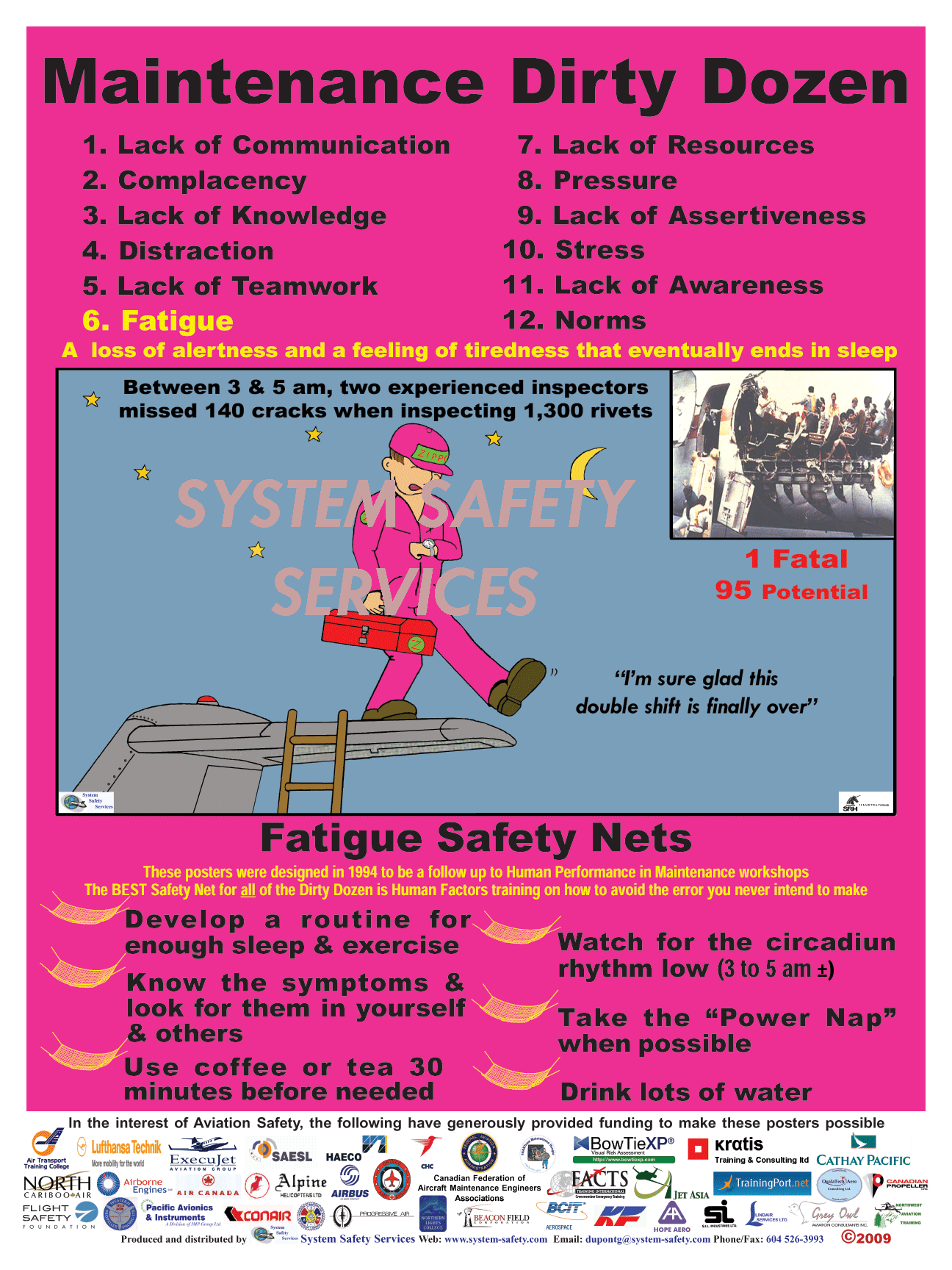
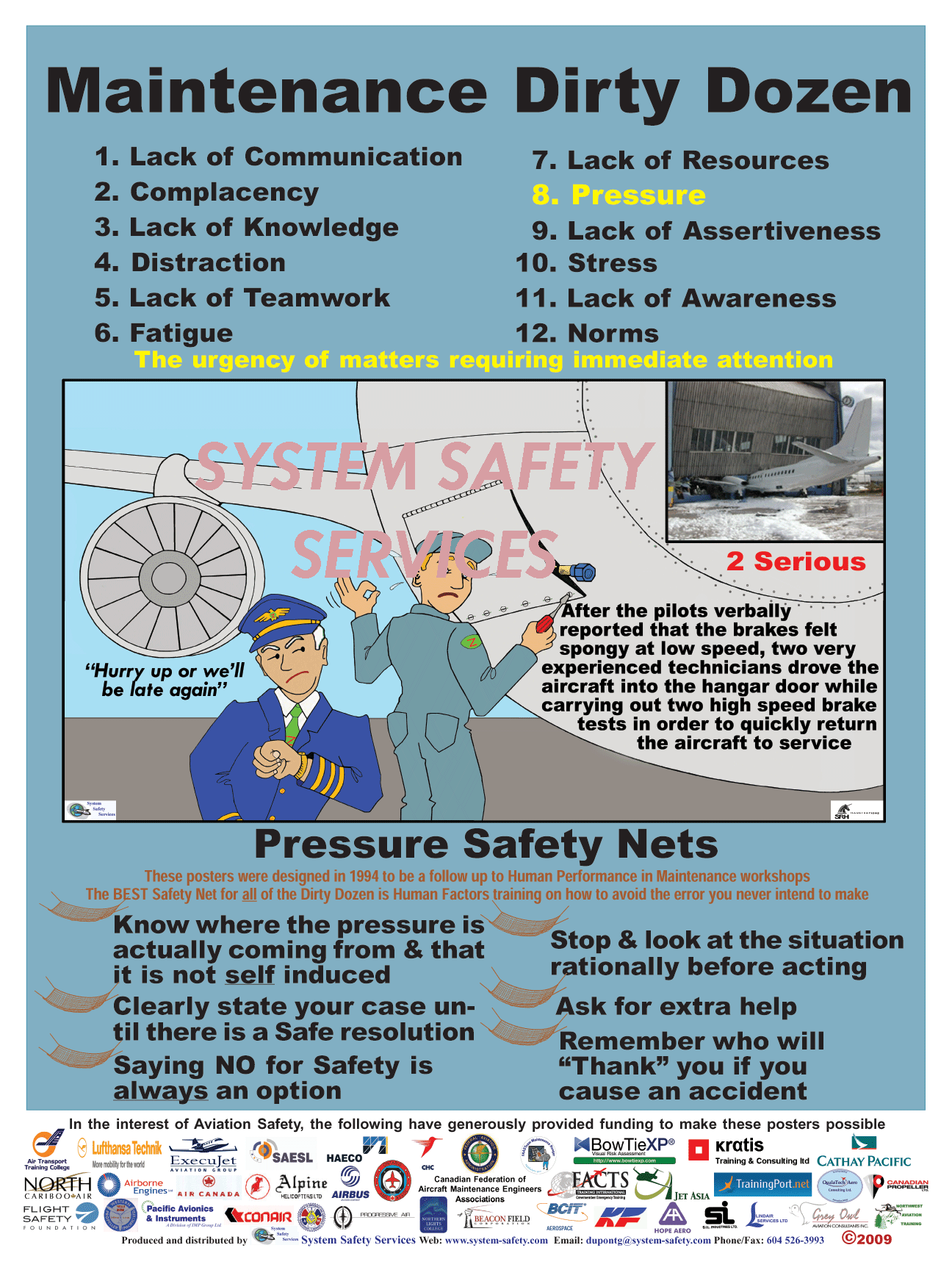
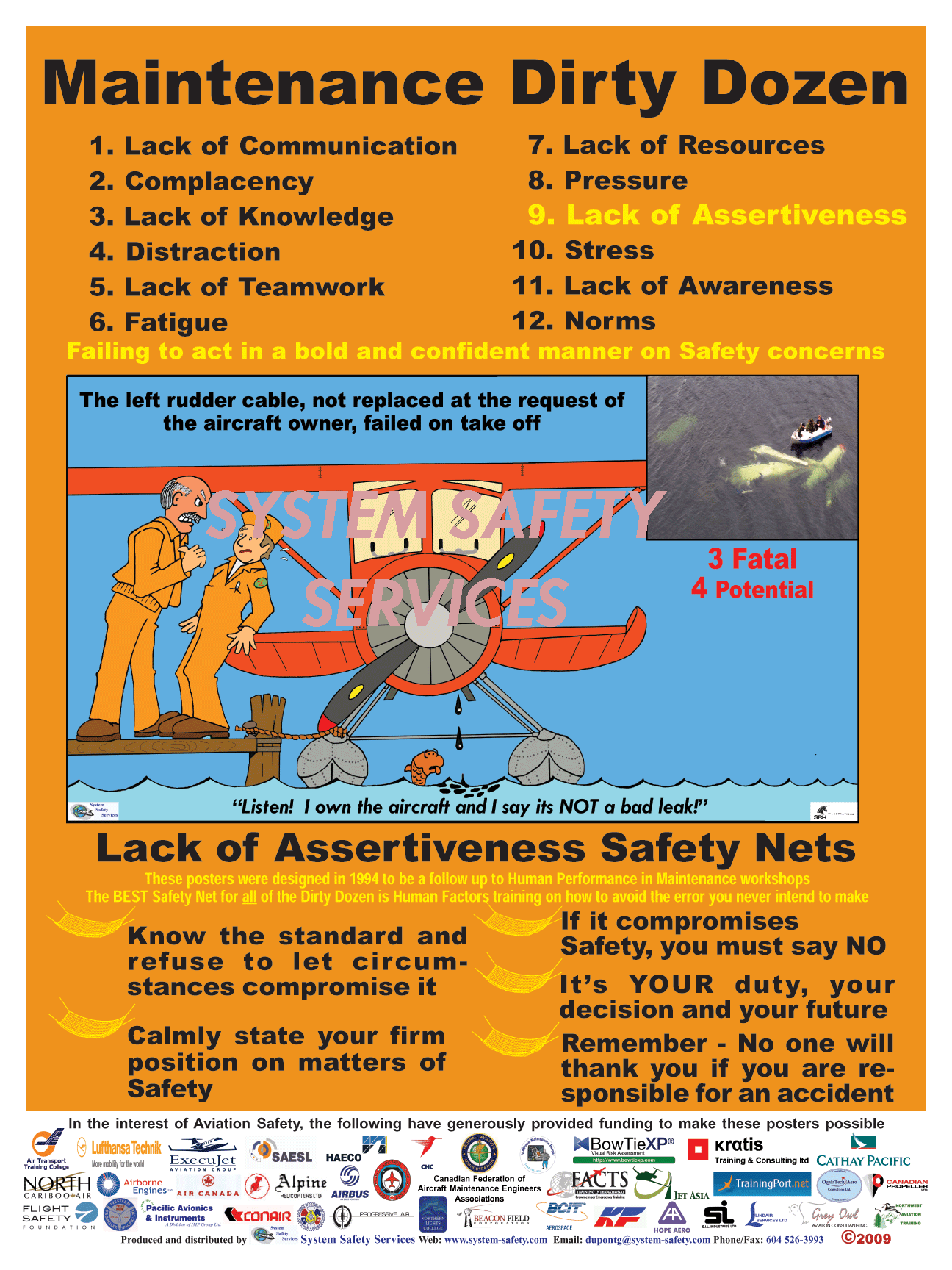
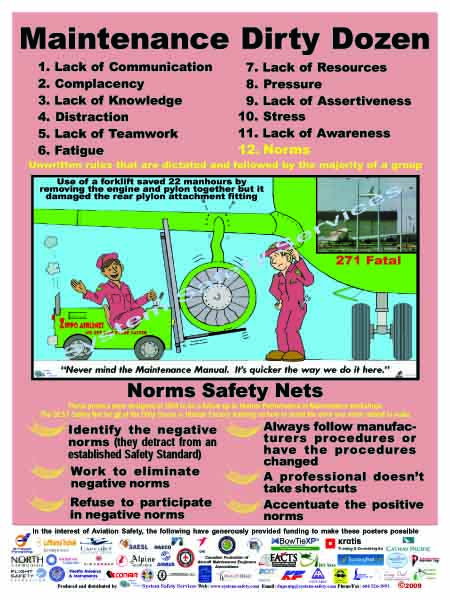
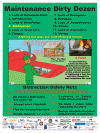
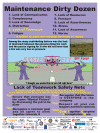
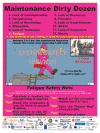
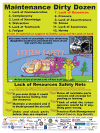
Maintenance (HPIM) workshops are centered around the (Dirty Dozen).
They are presented here for you
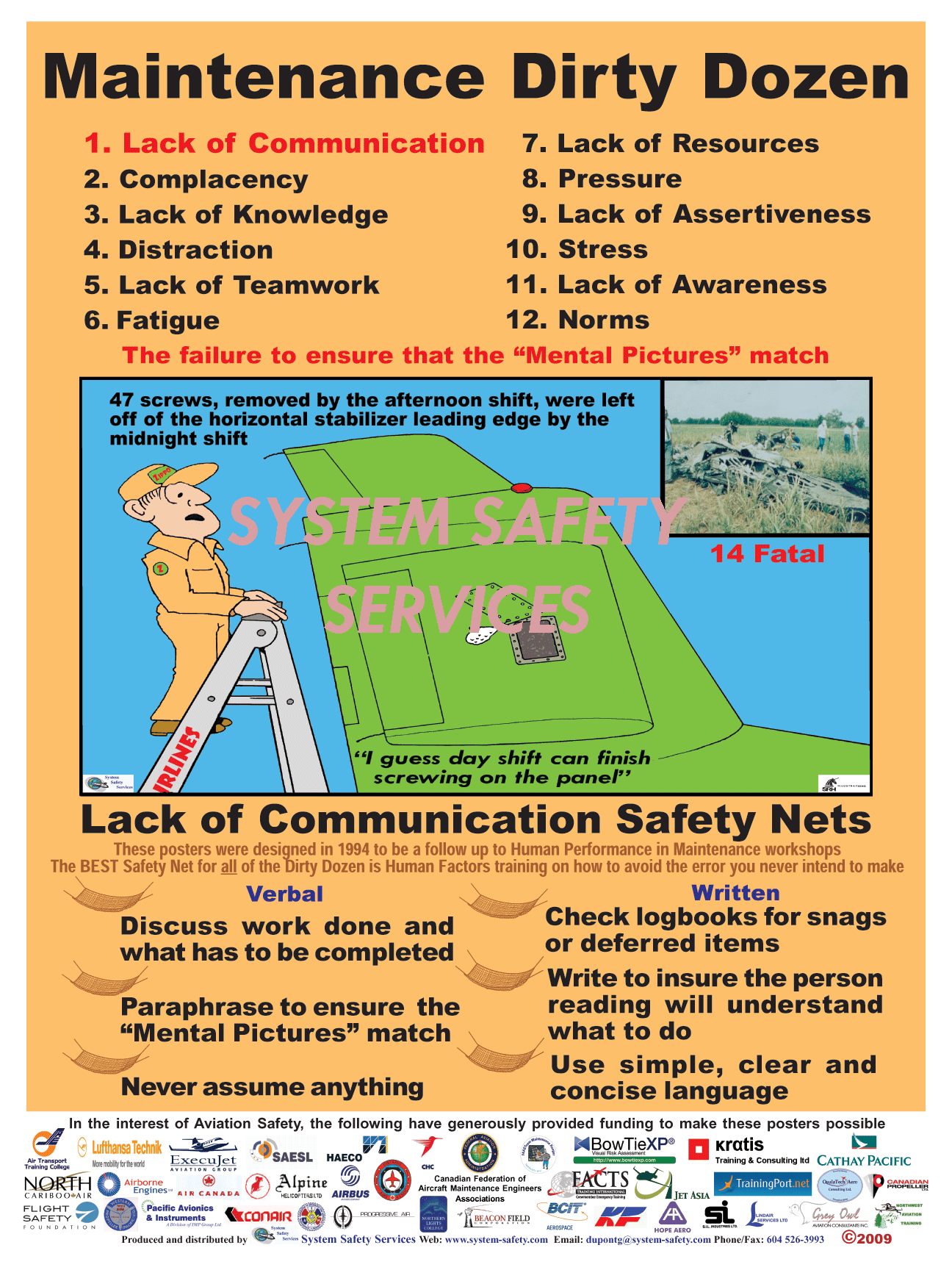
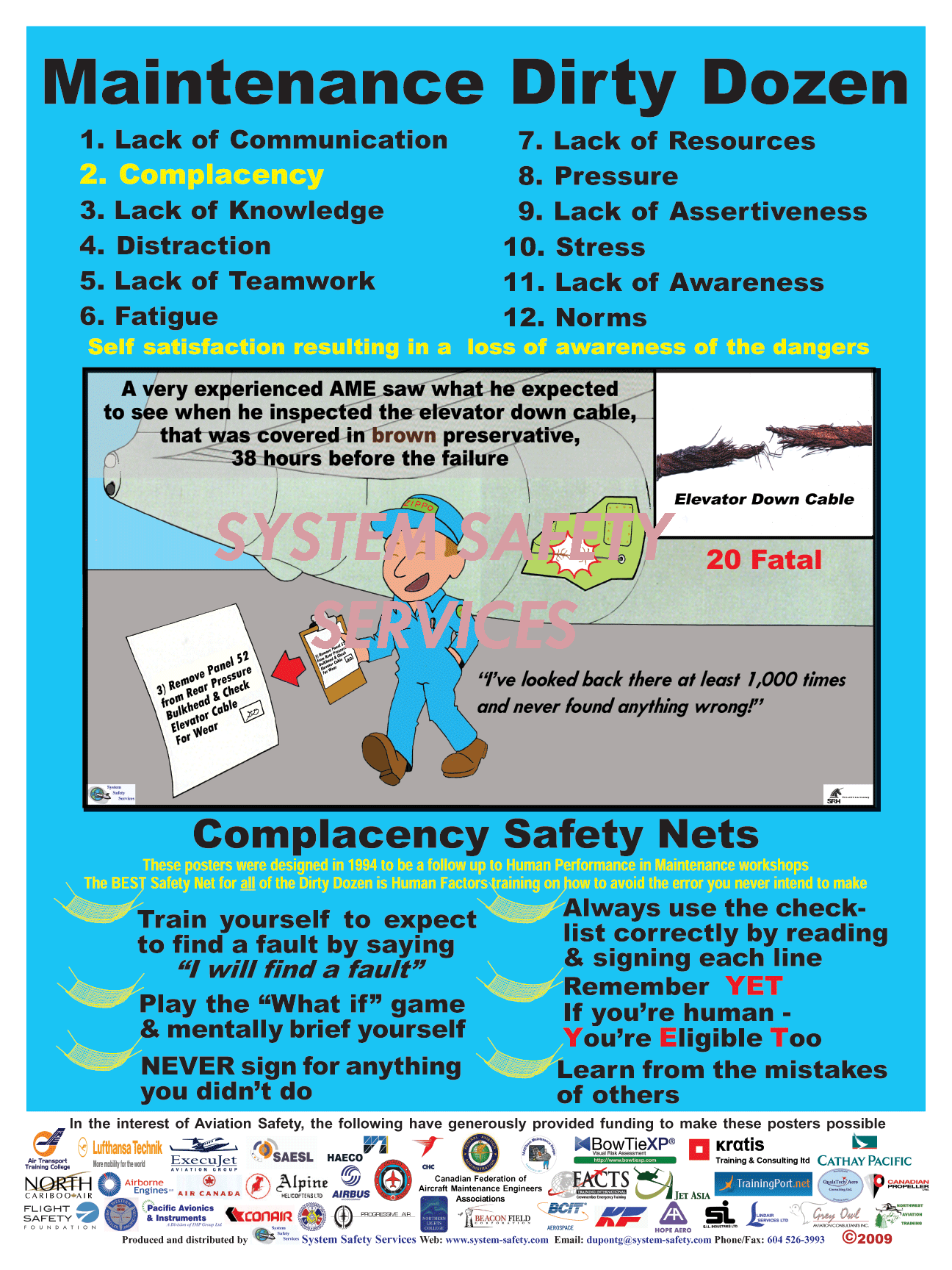
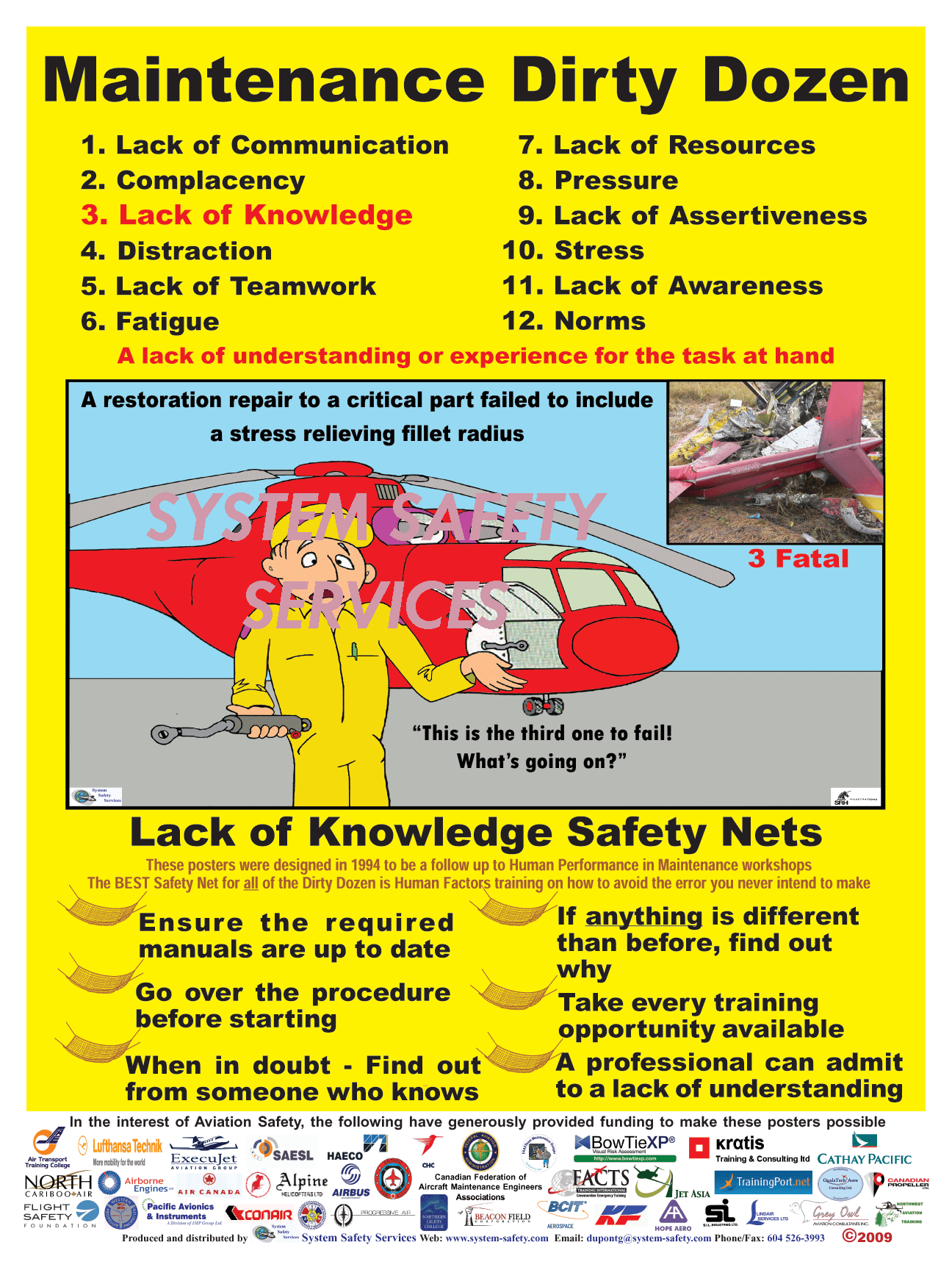
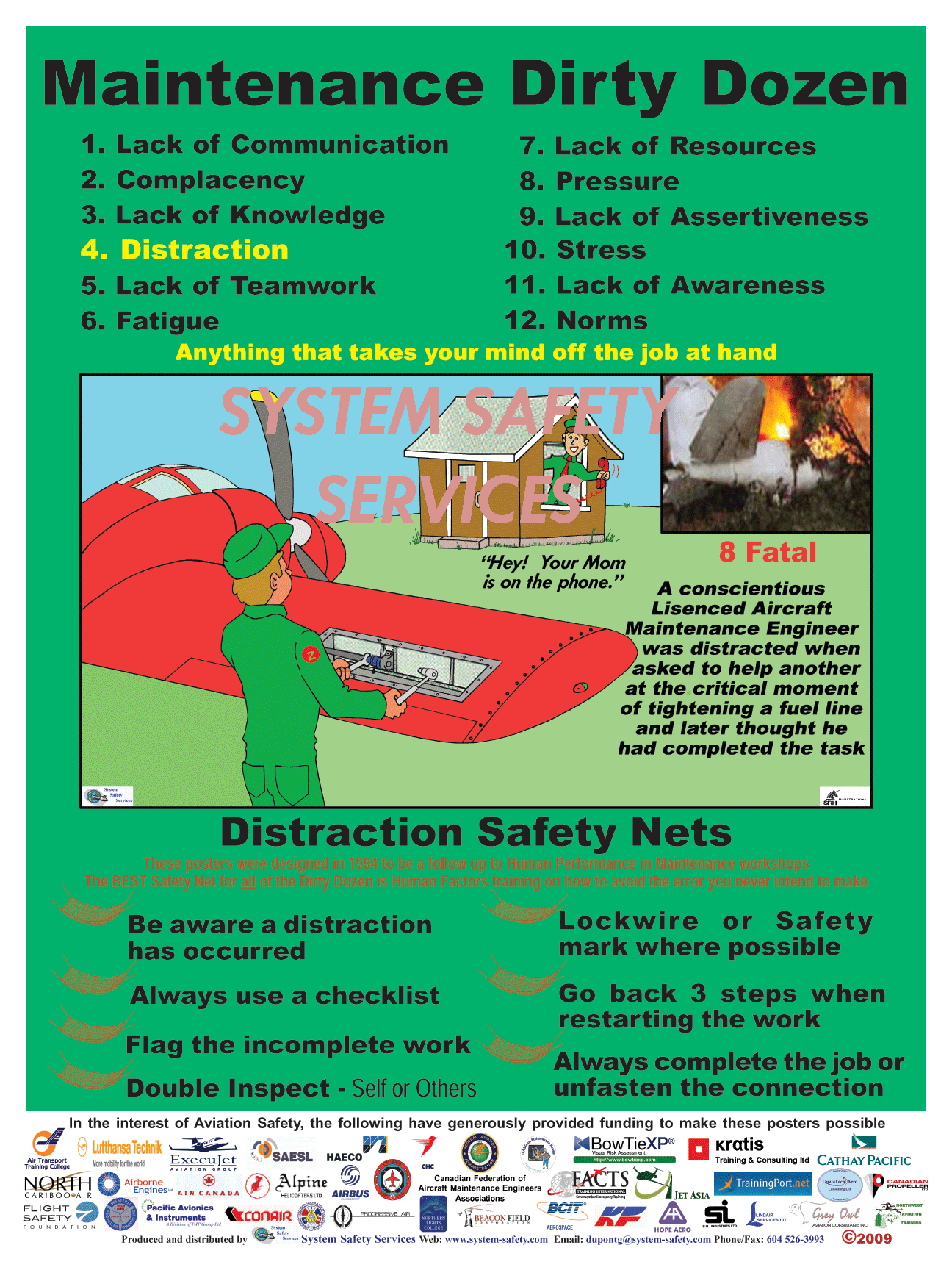
to view. The Dirty Dozen posters were designed to be a follow up to Human
Performance in Maintenance Part 1 training in order to help maintain the
awareness the training creates.
Click on the thumbnail to
enlarge each image
|
|
|
|
|
|
|
|
Lack of Communication
|
Complacency
|
Lack of Knowledge
|
Distraction
|
Lack of Teamwork
|
Fatigue
|
|
|
|
|
|
|
|
|
Lack of Resources
|
Pressure
|
Lack of Assertiveness
|
Stress
|
Lack of Awareness
|
Norms
|
If you are interested in ordering a set of these
posters -
click here to go to our order form.
As with all our
workshops we offer this guarantee:
"If at the end of the
workshop, any person feels that it was a waste of his/her time, we will
refund the fee minus only expenses." (No
free donuts)
We have trained over 10,000 persons and have
yet to meet this person.
We run monthly workshops in Vancouver BC
Canada (See "Workshop Dates") and would be pleased to run a workshop anywhere in
the world on request.
This two-day workshop was designed to be a
follow up to the Part 1(about a year later) and reinforces lessons learned in
Part 1 as well as covering new material. Part 2 serves to promote the
AME/AMT as the true professional that he/she is
Day One
Introduction, Course Objective and Review
of Part 1
Part 2 begins, as do all the workshops,
with the objective and motivator. (Why should I be here?)
Following this is a review of the Part 1 "Dirty Dozen" in the form
of a video case study that challenges them to spot the "Dirty
Dozen" and "Early Life Decisions" in a mock accident
interview.
Attitudes
A quiz gives them an idea of their
attitude and then goes on to develop how attitudes are formed and what they
can do to improve their attitude.
The afternoon is spent with "Personal
Case Studies." These stories
about human errors made are a powerful training tool to illustrate how
simple errors can happen to anyone.
Day Two
Communication - The Written Word"
This focuses on how to ensure the writer
and the reader's "mental pictures" match. An actual case
study where an incorrect logbook entry results in 24 deaths gives them a
chance to rewrite the entry
Company Culture
This is looked at in order to provide an
understanding of it's influence on the work safety environment
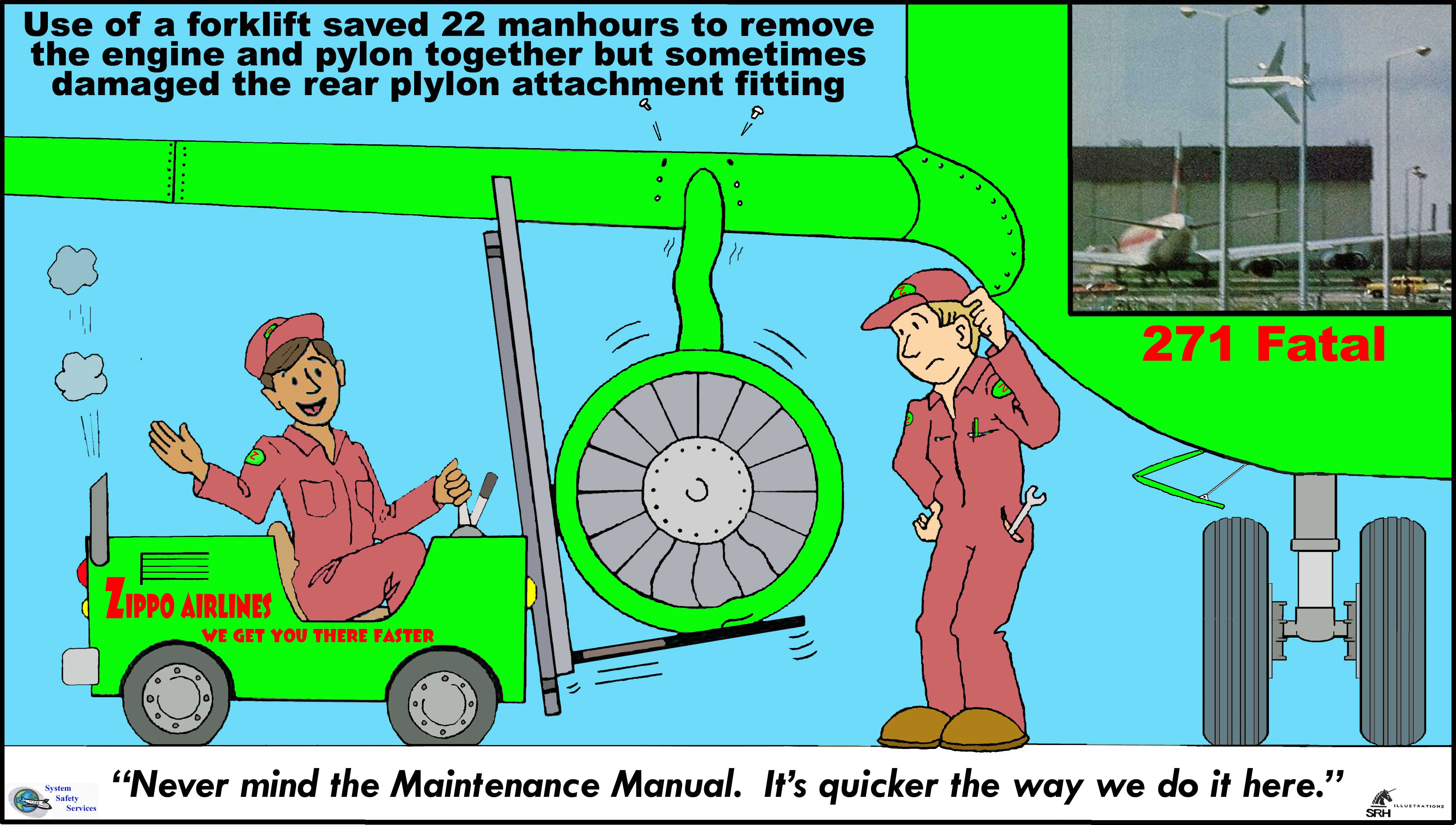
Norms - The Way We Do It Here
Norms are studied for their positive and
negative influence. Participants are trained on how to recognize the
difference and how to deal with the negative ones
Case Studies
Two rather complex case studies are used
that illustrate the influence of company culture as well as of the role of
maintenance in the accidents.
Wrap up
The workshops all
end with the participants setting safety goals from what they have
learned
A certificate of
training is issued to the participants
Some comments from participants
Q This is one of the most
valuable workshops ever been presented to maintenance people.
Q Once again it was
serious and entertaining at the same time: for me it was valuable.
Q Can’t wait for next
one
If you go back and click on
"Aviation HF News," scroll down to 2007 Volume 3 Issue 14 and
scroll down to Workshop at JetBlue. There you will find some comments
from their newsletter that are worth reading.
Audit Review
of Workshop
Many participants have indicated that it is
better than Part 1 but the participant’s attitude on beginning this second
workshop, likely accounts for the positive acceptance.
This workshop is designed so it can be cut
down to one day with less review of Part 1. This is not recommended but can be
done.
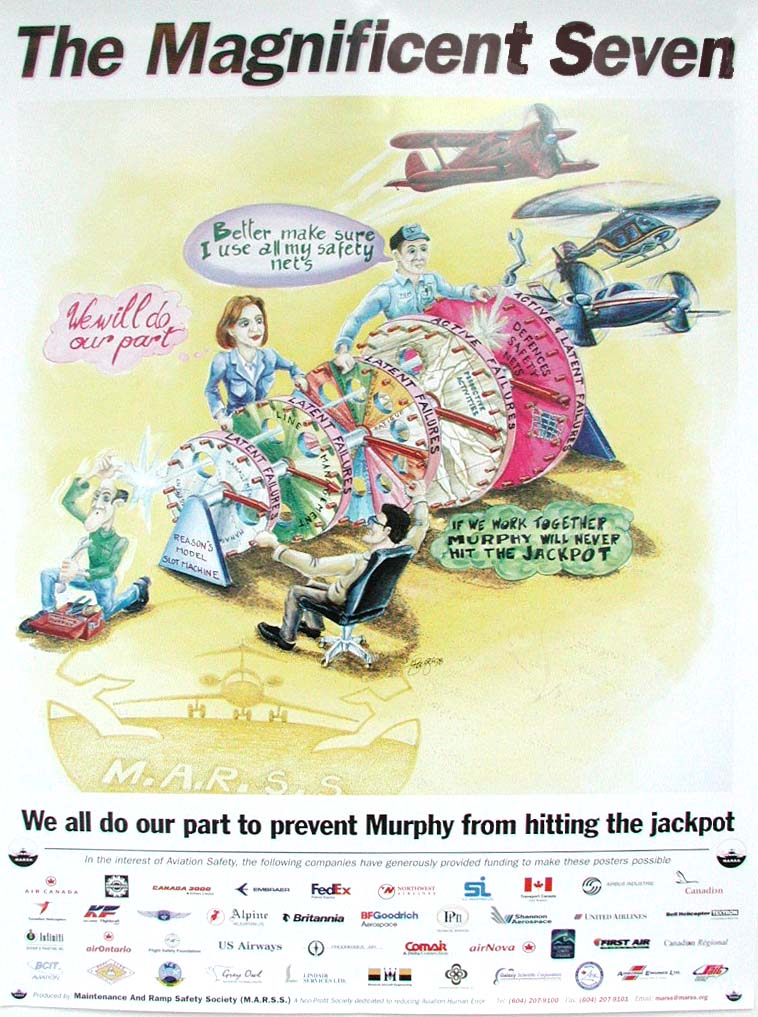
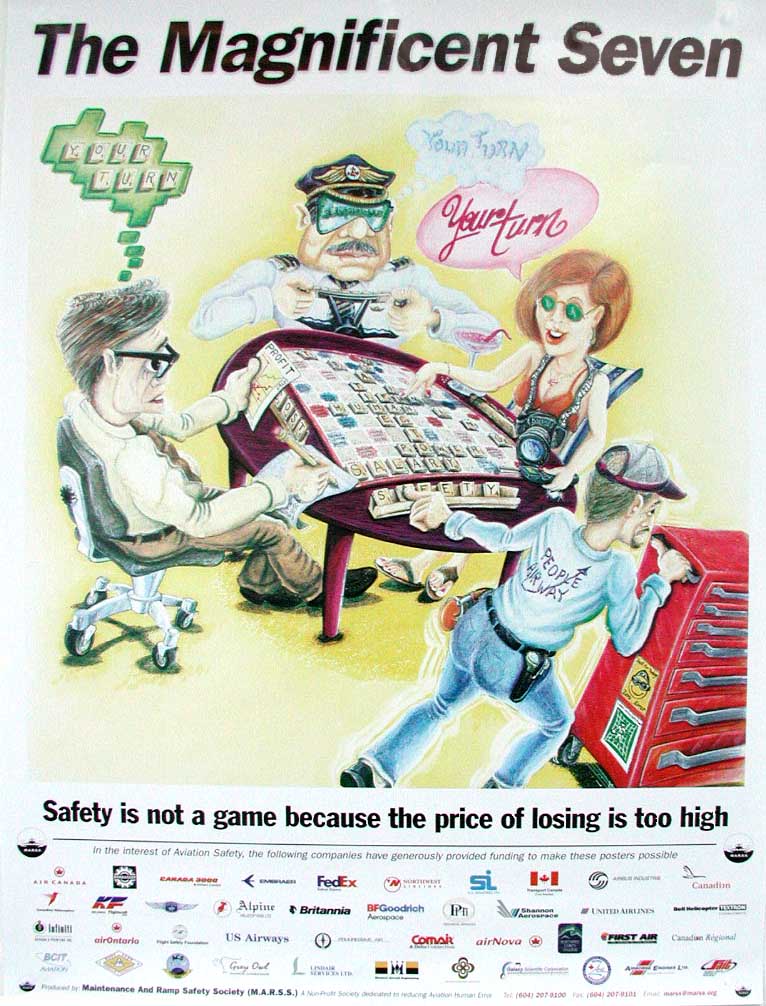
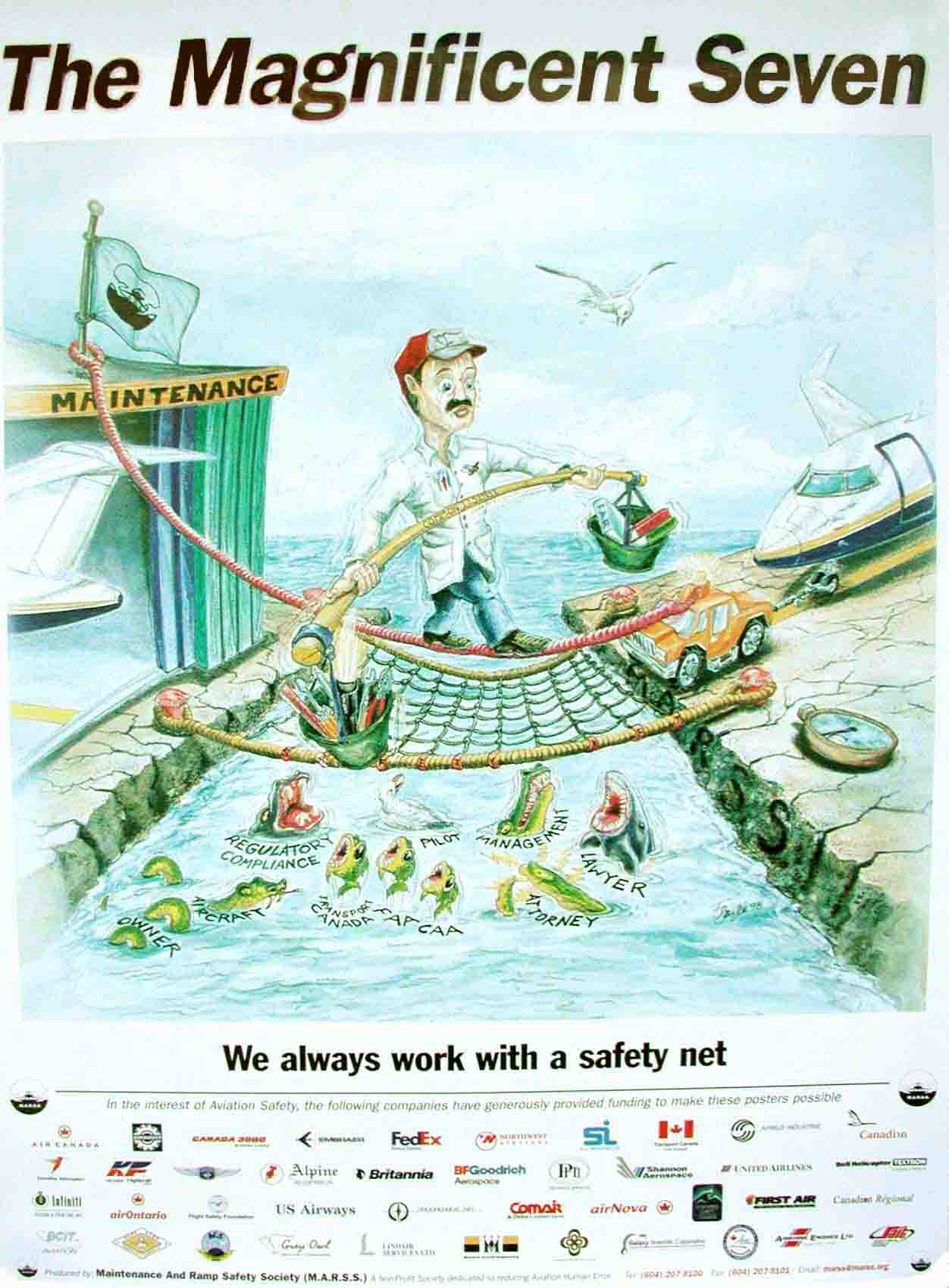
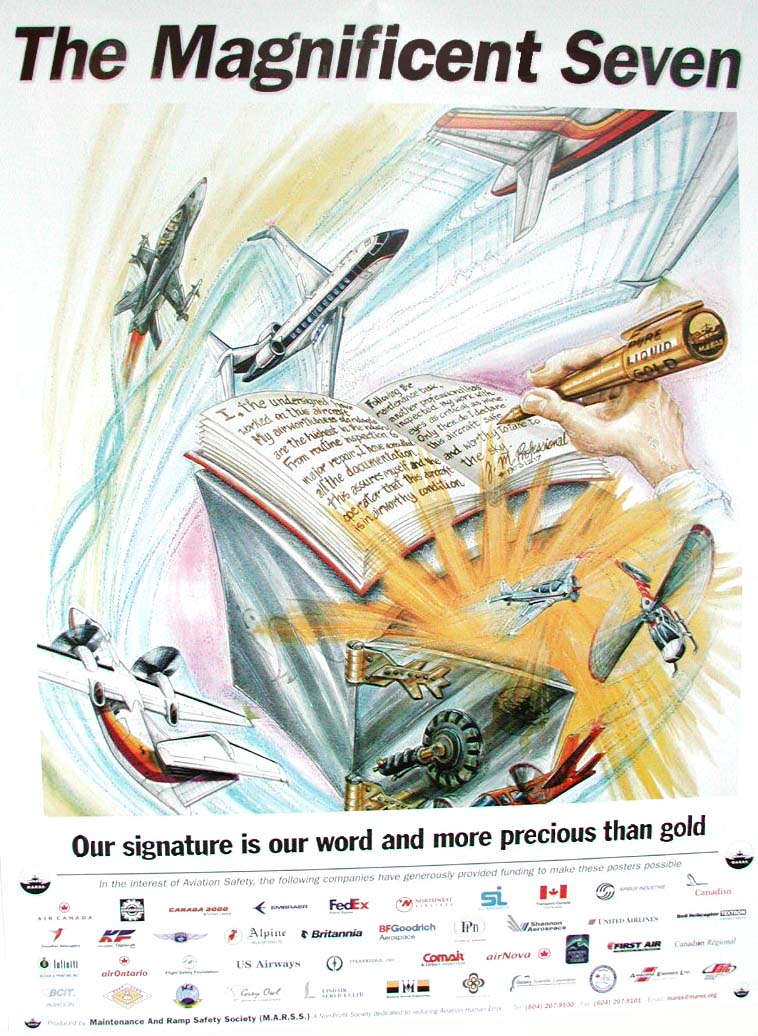
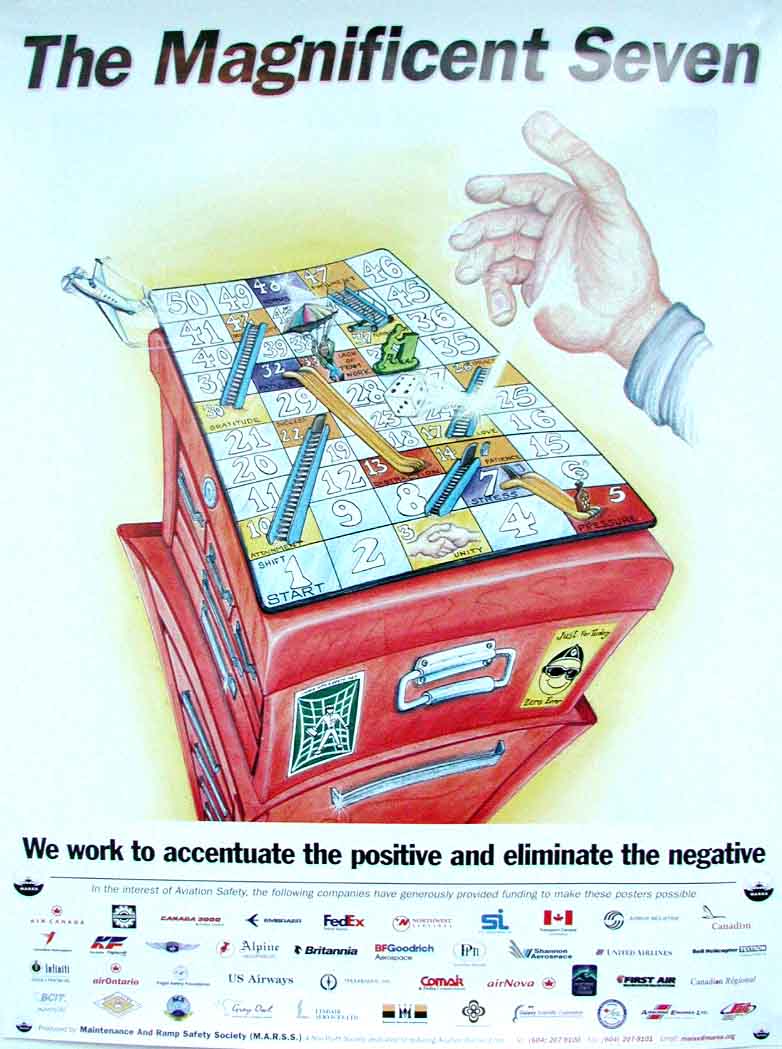
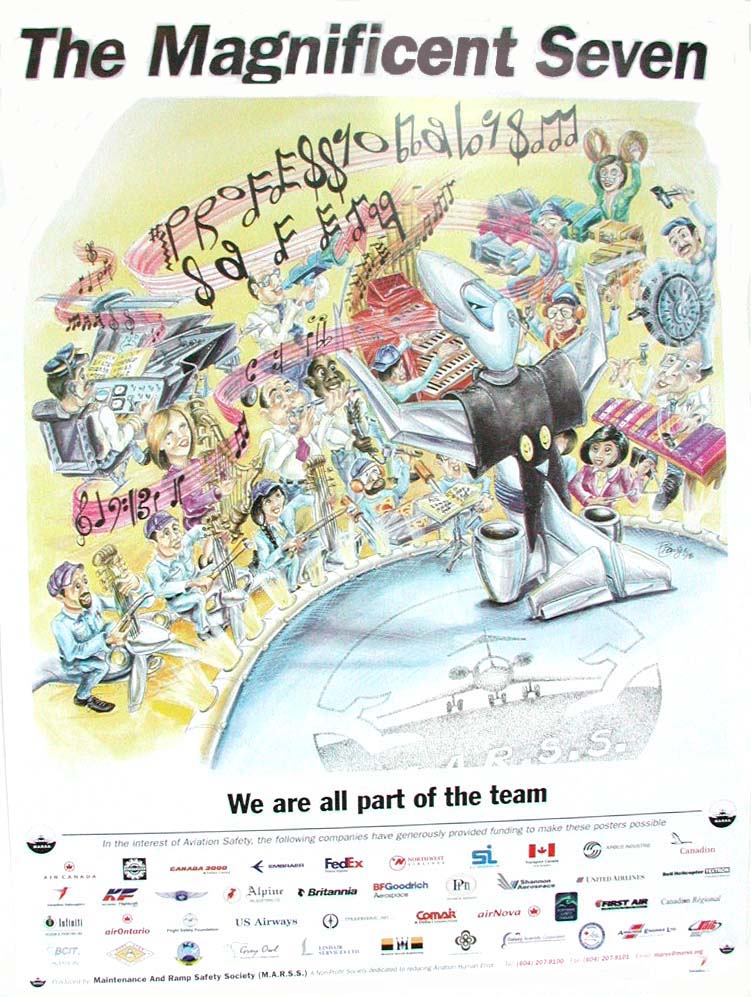
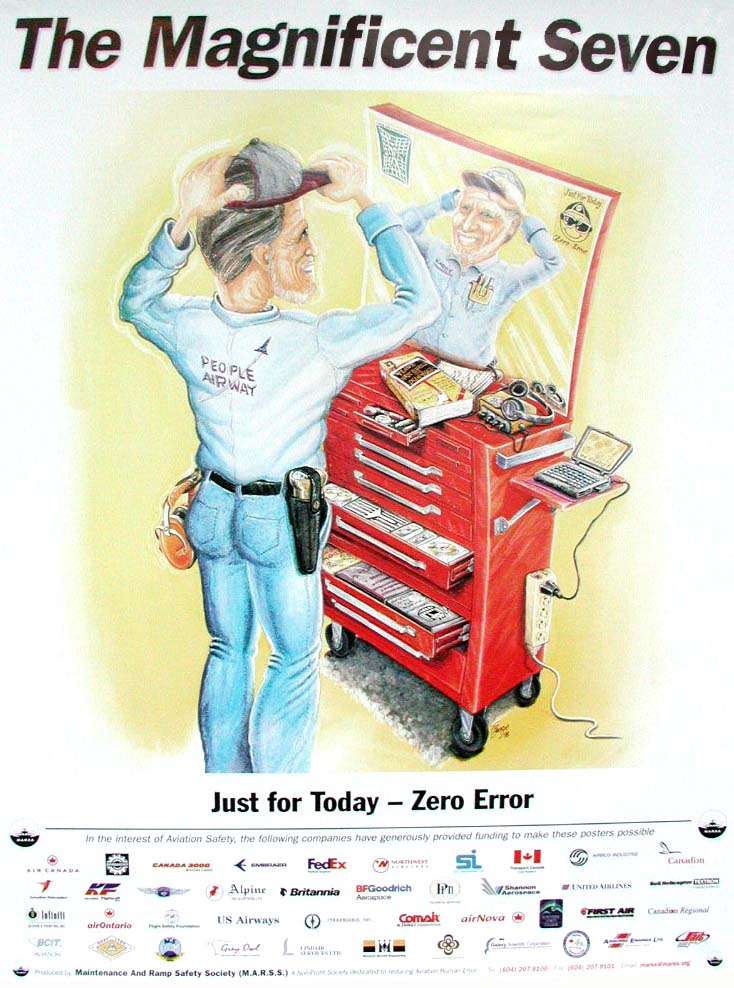
The Magnificent 7 series of posters were
designed to be the follow up to this workshop and all 8 posters promote the
maintenance person as a professional. The 8th in the series of 7 is a list
of 10 reasons why the maintenance person is a professional.
These posters are designed to be a follow up
to the Human Performance in Maintenance Part II workshop. They promote the
maintenance technician as a professional.
Click on the thumbnail to
enlarge each picture








If you are interested in ordering a set of these
posters -
click here to go to our order form.
As with all our
workshops we offer this guarantee:
"If at the end of the
workshop, any person feels that it was a waste of his/her time, we will
refund the fee minus only expenses." (No
free donuts)
We run monthly workshops in
Vancouver BC Canada (See "Workshop Dates") and would be pleased to run a
workshop anywhere in the world on request.
Human Performance in Maintenance Part 3
Part 3 is designed to be a follow on from
Part 2 and can include pilots and management staff as well.
The workshop is designed to be one-day and
covers the following Chapters or topics:
1) Introduction or "Why We Are
Here"
This serves to answer that question and
introduce the objective
2) Conflict Resolution in a team
environment or "Sorting it Out"
This Chapter demonstrates the importance
of teamwork and how conflict can interfere with that teamwork. It
provides solutions to conflict
3) Risk Management "How Do
We Do It?"
This important Chapter leads into the next
as a Safety Culture is about managing risk. The participants learn
about risk management and are provided a simple model that looks at the
three elements of risk: Frequency, Severity and Benefit and uses a formula
to determine a Risk Quotient
They are then given 5 exercises to
determine the risk quotient
4) What is a Safety Culture "It's
Not What is Said That Defines a Safety Culture. It's What is
Done"
This Chapter, in effect defines what
constitutes a Safety Management System and provides a simple model to
understand it
5) Case Studies
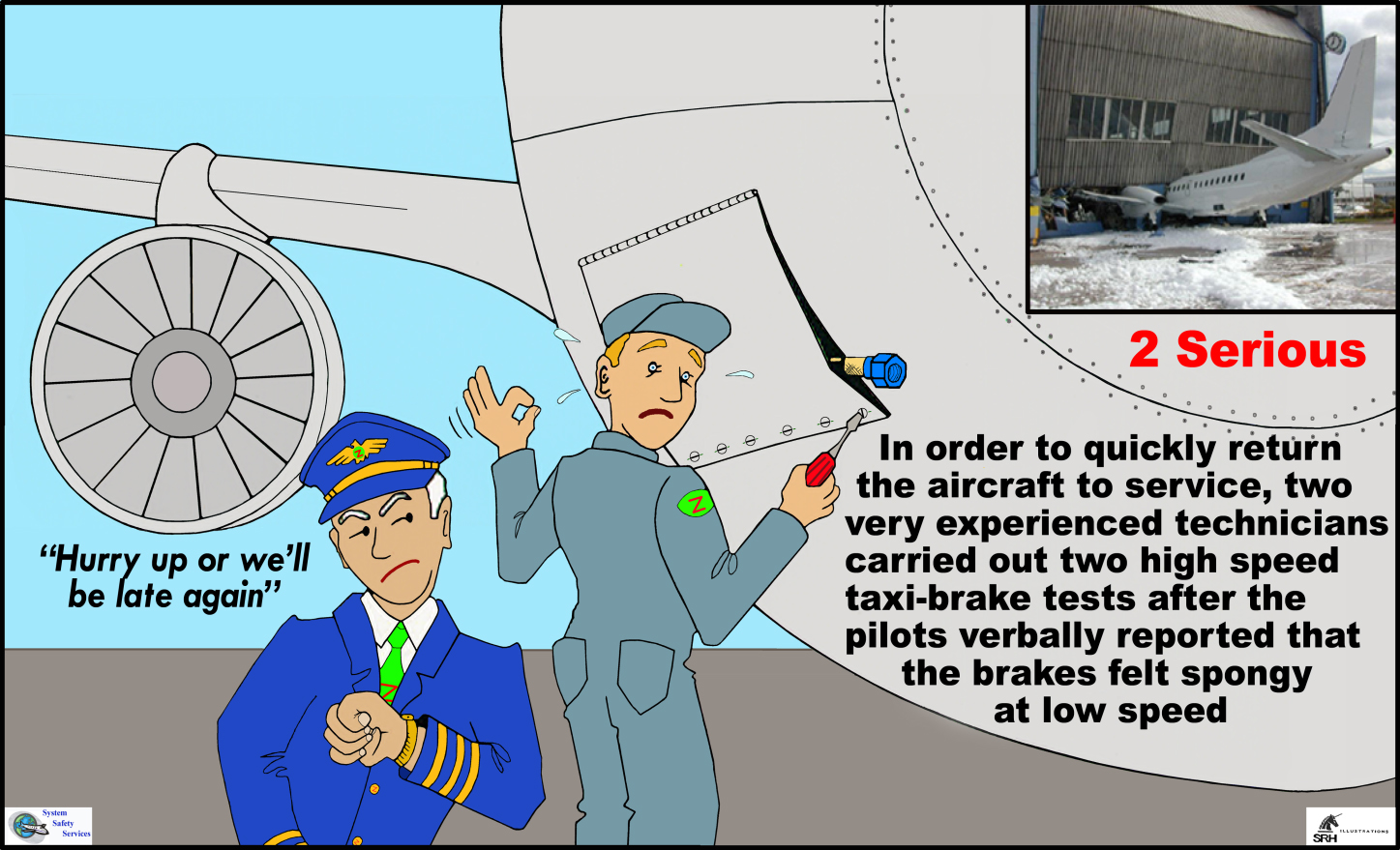
Two case studies are used to reinforce the
lessons learned. Both case studies are based on actual events where
the company culture played a role
6) Wrap up
The workshops all
end with the participants setting safety goals from what they have
learned
A certificate of
training is issued to the participants
Some comments from past courses.
Q Wow. Entertaining,
educational and even inspirational. Thanks,
Q
Really helped put things in prospective. Am more aware of how we all
work together.
Q Very
well done. I will use it and pass it on to others.
Q Thanks
for making me more aware. I know that what I learned today will stop
something bad from happening in the future.
The greater the mix of participants the
better.
All three workshops are designed to be
entertaining as well as educational. All material is designed to be useful to
the participant in his/her work.
They are simple and do not require memorizing
lists or acronyms.
All have or will have follow up posters to
help maintain the level of awareness the workshop provides.
If we can be of assistance to you or you
would like to know more, please feel free to contact us at the Email below or at
the phone, fax or address on the front page.
As with all our
workshops we offer this guarantee:
"If at the end of the
workshop, any persons feels that it was a waste of his/her time, we will
refund the fee minus only expenses." (No
free donuts)
To date with over 10000 persons
trained(2010), we have yet to meet that
person.
To order posters, please visit our shopping cart
or to enquire about our workshops, please email Renée
|